Introduction
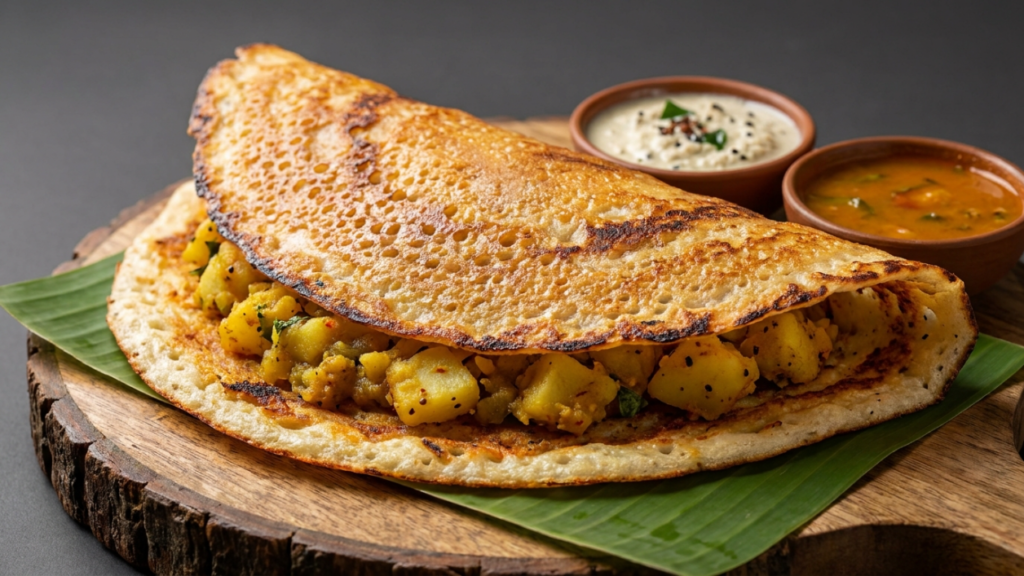
If you’ve ever dreamed of recreating the magic of South Indian restaurant cuisine in your own kitchen, this Masala Dosa recipe is your golden ticket! Masala Dosa is one of India’s most beloved breakfast dishes—a crispy, paper-thin crepe made from fermented rice and lentil batter, stuffed with a flavorful spiced potato filling, and served with coconut chutney and sambar. The contrast between the crispy exterior and the soft, aromatic potato masala inside creates an explosion of textures and flavors that has made this dish famous worldwide.
While Masala Dosa might seem intimidating to make at home, I’m here to tell you that with the right guidance and a little patience, you can master this iconic dish. This recipe breaks down every step in detail, from preparing the perfect batter to achieving that restaurant-style golden crispiness. Whether you’re a seasoned home cook or a beginner eager to explore Indian cuisine, this comprehensive guide will help you create authentic Masala Dosas that rival your favorite restaurant.
At Duniya World Recipes, we believe that traditional recipes should be accessible to everyone, regardless of where you are in the world. This recipe uses simple ingredients and straightforward techniques that deliver spectacular results. Get ready to impress your family and friends with this stunning dish that’s perfect for breakfast, brunch, or even dinner!
What Is Masala Dosa?
Masala Dosa is a quintessential South Indian dish that originated in the Udupi region of Karnataka, though its popularity has spread across India and around the globe. At its core, it’s a fermented crepe made from a batter of rice and urad dal (split black lentils), cooked until golden and crispy, then filled with a spiced potato mixture called “masala.”
The word “dosa” refers to the thin, crispy crepe itself, while “masala” indicates the spiced filling. The traditional filling consists of boiled potatoes sautéed with onions, green chilies, ginger, curry leaves, and a tempering of mustard seeds and turmeric. This simple yet flavorful combination has remained largely unchanged for generations, testament to its perfect balance of flavors.
What makes Masala Dosa truly special is the fermentation process. The batter is allowed to ferment overnight, developing complex flavors and creating those characteristic tiny holes that make the dosa crispy. This fermentation also makes the dosa more digestible and increases its nutritional value. Served alongside coconut chutney and sambar (a tangy lentil-based vegetable stew), Masala Dosa represents the perfect harmony of taste, texture, and nutrition that defines South Indian cuisine.
Why You’ll Love This Masala Dosa Recipe
This Masala Dosa recipe has been tested and perfected to ensure success every time. Here’s why it will become a favorite in your household:
- Authentically delicious: This recipe delivers the genuine taste and texture of restaurant-quality Masala Dosa with a perfectly crispy exterior and flavorful filling.
- Naturally vegan and gluten-free: Made entirely from plant-based ingredients, this dish is suitable for various dietary preferences without any modifications.
- Nutritious and satisfying: The fermented batter provides probiotics, while the potato filling offers complex carbohydrates and the accompaniments add protein and vitamins.
- Impressive yet achievable: While it looks and tastes like a complex dish, the actual cooking process is straightforward once you understand the basics.
- Meal prep friendly: The batter can be made in advance and stored for several days, making weekday breakfasts quick and easy.
- Versatile serving options: Perfect for breakfast, brunch, lunch, or a light dinner—Masala Dosa works for any occasion.
- Customizable: The basic recipe can be adapted with different fillings and accompaniments to suit your taste preferences.
Ingredients for Masala Dosa
The beauty of this recipe lies in its simple, wholesome ingredients. You’ll need components for three parts: the dosa batter, the potato filling, and the accompaniments.
For the Dosa Batter:
| Ingredient | Quantity | Notes |
|---|---|---|
| Parboiled rice (idli rice) | 2 cups | Regular rice can substitute |
| Urad dal (split black lentils) | ½ cup | Skinned variety preferred |
| Fenugreek seeds | ½ teaspoon | Aids fermentation |
| Salt | 1 teaspoon | Or to taste |
| Water | As needed | For grinding and consistency |
For the Potato Masala Filling:
- 4 medium potatoes, boiled and mashed
- 2 tablespoons cooking oil
- 1 teaspoon mustard seeds
- 1 teaspoon cumin seeds
- 10-12 curry leaves
- 2 green chilies, finely chopped
- 1 large onion, finely chopped
- 1-inch piece ginger, grated
- ½ teaspoon turmeric powder
- Salt to taste
- Fresh cilantro for garnish
- 2 tablespoons lemon juice (optional)
For Cooking and Serving:
- Oil or ghee for spreading on the griddle
- Coconut chutney (recipe link: coconut chutney)
- Sambar (recipe link: sambar recipe)
Step-by-Step Instructions for Perfect Masala Dosa
Step 1: Preparing and Fermenting the Dosa Batter
The foundation of great Masala Dosa is perfectly fermented batter. Start by washing the parboiled rice thoroughly in several changes of water until the water runs clear. Similarly, wash the urad dal and fenugreek seeds together. Soak them separately—rice in one bowl with plenty of water, and dal with fenugreek seeds in another bowl with water. Let both soak for at least 6-8 hours or overnight.
After soaking, drain the water completely. Begin by grinding the urad dal and fenugreek seeds first. Transfer them to a high-powered blender or wet grinder, adding water gradually (about ½ cup at a time) to achieve a smooth, fluffy consistency. The batter should be light and airy—this is crucial for soft, crispy dosas. Pour this into a large container.
Next, grind the soaked rice, adding water as needed to create a slightly grainy but smooth batter. The rice batter should have a consistency similar to pancake batter. Combine both batters in the large container, add salt, and mix thoroughly with your hand (the warmth from your hand actually helps fermentation). Cover the container and place it in a warm spot for 8-12 hours until the batter doubles in volume and develops a slightly sour aroma.
Step 2: Making the Potato Masala Filling
While your batter ferments (or just before making dosas), prepare the potato filling. Boil the potatoes until tender, peel them, and mash them roughly—leaving some chunks adds nice texture. Heat oil in a pan over medium heat. Add mustard seeds and let them splutter, then add cumin seeds. Once they begin to crackle, add curry leaves (be careful, they splutter) and green chilies.
Add the chopped onions and sauté until they turn translucent and light golden, about 5-7 minutes. Add grated ginger and sauté for another minute until fragrant. Sprinkle in the turmeric powder and stir well. Now add the mashed potatoes, salt, and about ¼ cup water. Mix everything thoroughly, breaking up any large potato chunks. Cook for 3-4 minutes, allowing the flavors to meld together. The masala should be moist but not watery. Turn off the heat, add lemon juice if using, and garnish with fresh cilantro. Keep the filling warm.
Step 3: Preparing to Cook Dosas
Once your batter has fermented properly, give it a gentle stir. The consistency should be similar to thin pancake batter—it should coat the back of a spoon but still flow easily. If it’s too thick, add a little water and mix well. Have all your equipment ready: a cast-iron griddle or non-stick pan (preferably flat), a ladle, a flat spatula, and a small bowl with oil and a brush or paper towel.
Heat your griddle on medium-high heat. To test if it’s ready, sprinkle a few drops of water on the surface—they should sizzle and evaporate immediately. This initial heating is important for seasoning the pan. Reduce the heat to medium once properly heated.
Step 4: Spreading and Cooking the Dosa
For your first dosa, lightly grease the griddle with oil using a paper towel or brush. Pour a ladleful of batter (about ½ cup) in the center of the griddle. Immediately, using the back of the ladle in a spiral motion from the center outward, spread the batter into a thin, even circle about 8-10 inches in diameter. Don’t worry if there are small holes—this is normal and actually desirable!
Drizzle ½ teaspoon of oil or ghee around the edges and over the surface of the dosa. Let it cook undisturbed for 2-3 minutes until the bottom turns golden brown and crispy, and the edges begin to lift from the pan. You should see the surface changing color from white to slightly translucent with golden spots underneath.
Step 5: Adding the Filling and Folding
Once the bottom is crispy and golden, place 2-3 tablespoons of the warm potato masala in a line down the center of the dosa. Using your spatula, carefully fold one side of the dosa over the filling, then fold the other side over (like folding a letter), or simply fold it in half. Alternatively, you can roll it like a wrap. Carefully slide the folded dosa onto a serving plate.
For subsequent dosas, you typically don’t need to grease the pan again unless it starts sticking—the batter itself contains enough moisture. Repeat the process with the remaining batter, stacking the dosas or serving them immediately as they’re ready.
Pro Tips for Restaurant-Quality Masala Dosa
After making countless Masala Dosas, I’ve learned several tricks that make a significant difference:
- Use the right rice: Parboiled rice (idli rice) gives the best texture, but regular raw rice works too. A 50-50 mix provides a nice balance of crispiness and softness.
- Don’t skip fenugreek seeds: They’re essential for fermentation and add a subtle flavor that’s characteristic of authentic dosas.
- Perfect fermentation temperature: Fermentation works best between 75-85°F (24-29°C). In colder climates, place the batter in an oven with just the light on, or near a warm spot in your kitchen.
- The sound test: When the batter is ready, it should make a gentle fizzing sound when stirred—that’s the fermentation at work!
- Batter consistency is